Finding a Little Calm in a Busy Workday
A few practical ways to pause, choose the next task and give a crowded workday a clearer shape.

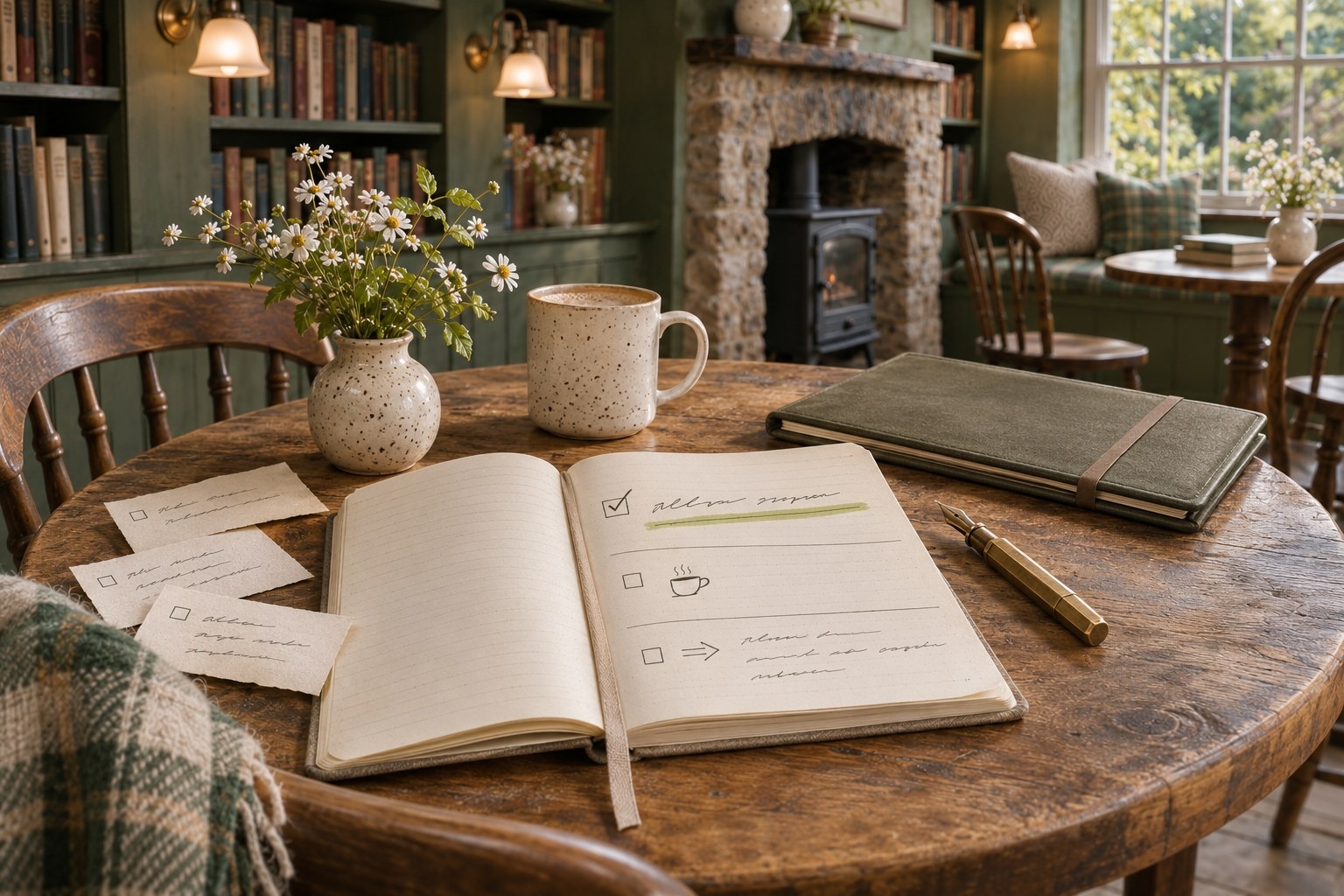
AI-created illustration of giving a busy workday one clear next step and a brief pause in the Quietly, Evelyn virtual book café. Books, drawings and notes are illustrative, not actual featured editions or personal records.
When the workday feels crowded, start with the next decision rather than the entire to-do list. What actually needs attention now, and what can be written down for later? A smaller question is easier to act on.
Check what needs doing next
Separate a real deadline from an item that merely arrived most recently. If priorities are unclear, ask the person who sets them. You shouldn't have to guess between two supposedly urgent tasks indefinitely.
Take a brief break when you can
Step away from the screen, get a drink, or look somewhere else for a minute. Choose a pause that fits your work and access needs. You can use it without expecting it to solve the workload.
When you return, leave yourself a clear starting point: the paragraph to revise, the number to check, or the message to answer.
Give one task a place
Choose a realistic stretch of time for a specific piece of work. Close unrelated tabs if they aren't needed. Write down anything you must return to so it doesn't disappear with the window.
If the work is interrupted, note the next step before switching. A short handover to yourself can spare you another round of wondering where you were.
Close what can be closed
At the end of the day, record unfinished items and any agreed follow-up. Follow the working arrangements that apply to your role; where those arrangements are unclear, clarify them rather than quietly extending every evening.
Leave a starting point for tomorrow, then use the time that is yours.
You can share a thought in the comments below.
Leave a note
Comments
Post a Comment