Slow Living for Busy People: What Actually Works
Slow living for busy people isn't about empty calendars — it's about your attention. Six simple, real practices that survive a busy week.
 ✦ Save
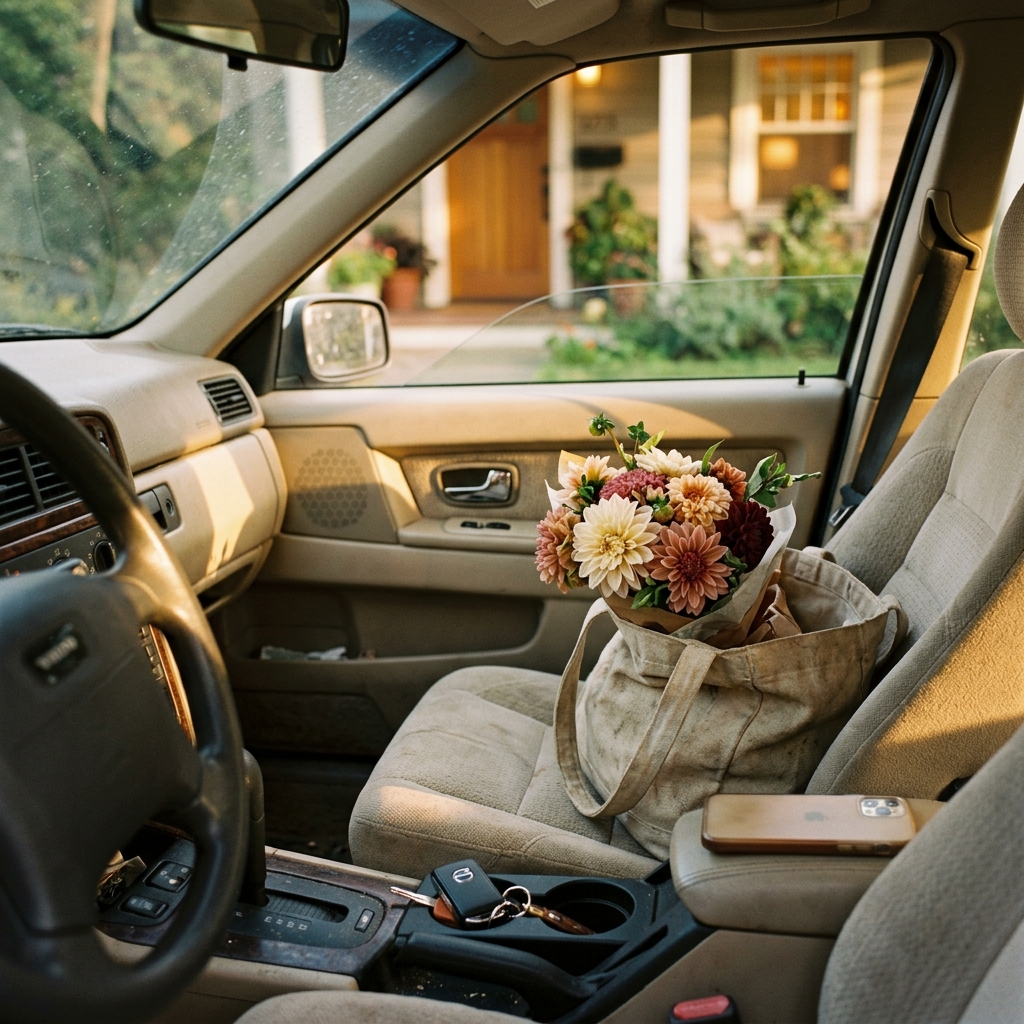
Last Tuesday I sat in my car in the driveway for two whole minutes after I'd turned off the engine. Groceries in the passenger seat, phone face-down in the cupholder, a to-do list still humming somewhere behind my eyes. I wasn't meditating. I wasn't doing anything you could put on Instagram. I was just sitting there, listening to the engine tick as it cooled, because it was the first moment all day that hadn't needed something from me.
This post contains affiliate links — see the disclosure for details. If you buy through them, it costs you nothing and keeps the lights on here.
Here's what nobody tells you about slow living for busy people: most of the advice isn't written for us. It's written for people with linen curtains and empty Thursdays. People who have somehow arranged their lives so that "slow" is the default setting, and who now make sourdough about it. I have never once made sourdough. My Thursdays are spoken for through October.
For a long time I thought that disqualified me. Slow living was a house I could visit on other people's blogs but never actually live in — not with this job, this calendar, this particular week. And then, somewhere between the driveway and the front door, it occurred to me that I might have the whole thing backwards.
Slow living was never about the amount of time you have. It's about what you do with your attention inside the time you've got. The two minutes in the car counted. They counted precisely because the rest of the day didn't stop for them.
So this is the version I actually live — not the aspirational one. Six small practices that have survived deadline weeks, sick days, and one memorable stretch in June I'd rather not discuss.
What slow living for busy people actually looks like
The parked-car pause
You've already read it. Two minutes, engine off, before you walk into the next thing — whether that's your house, the office, or school pickup. Not scrolling. Not planning. Just arriving before you arrive. It's the cheapest transition ritual I know, and unlike a morning routine, nobody can schedule a meeting over it.
One thing at full attention
Once a day, I pick something ordinary and give it everything. Usually it's the first coffee — made properly, drunk while it's hot, at a table, like a person. Some days it's washing the two bowls in the sink without a podcast running. The task doesn't matter. What matters is that for those few minutes, my attention isn't split six ways, and I remember what that feels like. It's a little embarrassing how much it feels like rest.
The no that buys back an evening
Every week has one commitment in it that's only there because saying yes was easier than the four seconds of awkwardness saying no would have cost. I've started finding that one and declining it — kindly, early, without a paragraph of apology. One reclaimed evening a week won't transform anything. But it's a whole evening. When was the last time anyone handed you one of those?
Dinner without the phone in the room
Not on silent. Not face-down. In another room, where it can carry on its urgent little life without me. The first few nights felt like leaving a toddler unattended. By the second week, dinner had become noticeably longer and I couldn't tell you why — the clock said twenty-five minutes either way. Something about a meal changes when there's nothing underneath it, waiting.
Practicing noticing
This one I borrowed from Jenny Odell's How to Do Nothing, a book that has very little to do with doing nothing and everything to do with where your attention goes when nobody's bidding for it. Her argument, roughly, is that attention is the one resource we still control — and I've found the smallest version of it is just noticing things on purpose. The specific way the light lands on the kitchen floor at seven. The neighbour's ridiculous, wonderful dahlias. It takes no time at all. That's the point. Noticing is the only slow-living practice that fits inside a life with zero margin, because it happens during the life, not instead of it.
A list before the week gets loud
Sunday evening, ten minutes, one honest list — not everything I could do, but the three things that will actually matter by Friday. I've written about my Sunday reset before, and this is the only part of it that has survived every busy season since: the week goes better when I've met it on paper first. Slower, somehow, even when it's objectively the same speed.
If it helps to have that on paper, the printable I use for those ten minutes is here: The Weekly Reset Planner.
None of this is a lifestyle. There's no aesthetic, no capsule anything, and my calendar is exactly as full as it was in the driveway last Tuesday. What's different is smaller and harder to photograph: the week has seams now. Little openings where I actually show up for my own life, in the middle of living it.
If you've been waiting for a quieter season to start living slower — a lighter month, an emptier calendar, some mythical September — I'd gently suggest the wait might be the problem. The two minutes in the car are available today. They were probably available yesterday.
Warmly, Evelyn
I read every note. The comment section here is the quietest corner of the internet — come sit.
Leave a note
Comments
Post a Comment