Four Thousand Weeks: A Quiet Guide to the Time We Cannot Save
A reflection on Oliver Burkeman's Four Thousand Weeks, and the quiet relief of accepting that we will never get everything done.
 ✦ Save
I think most of us live in a state of quiet optimism that one day, if we just find the right planner, the right app, or the right morning routine, we will finally clear the deck. We will answer every email, check off every task, satisfy every demand, and step into a calm, frictionless future where we are completely in control of our days. It is a comforting myth.
This post contains affiliate links — see the disclosure for details. If you buy through them, it costs you nothing and keeps the lights on here.
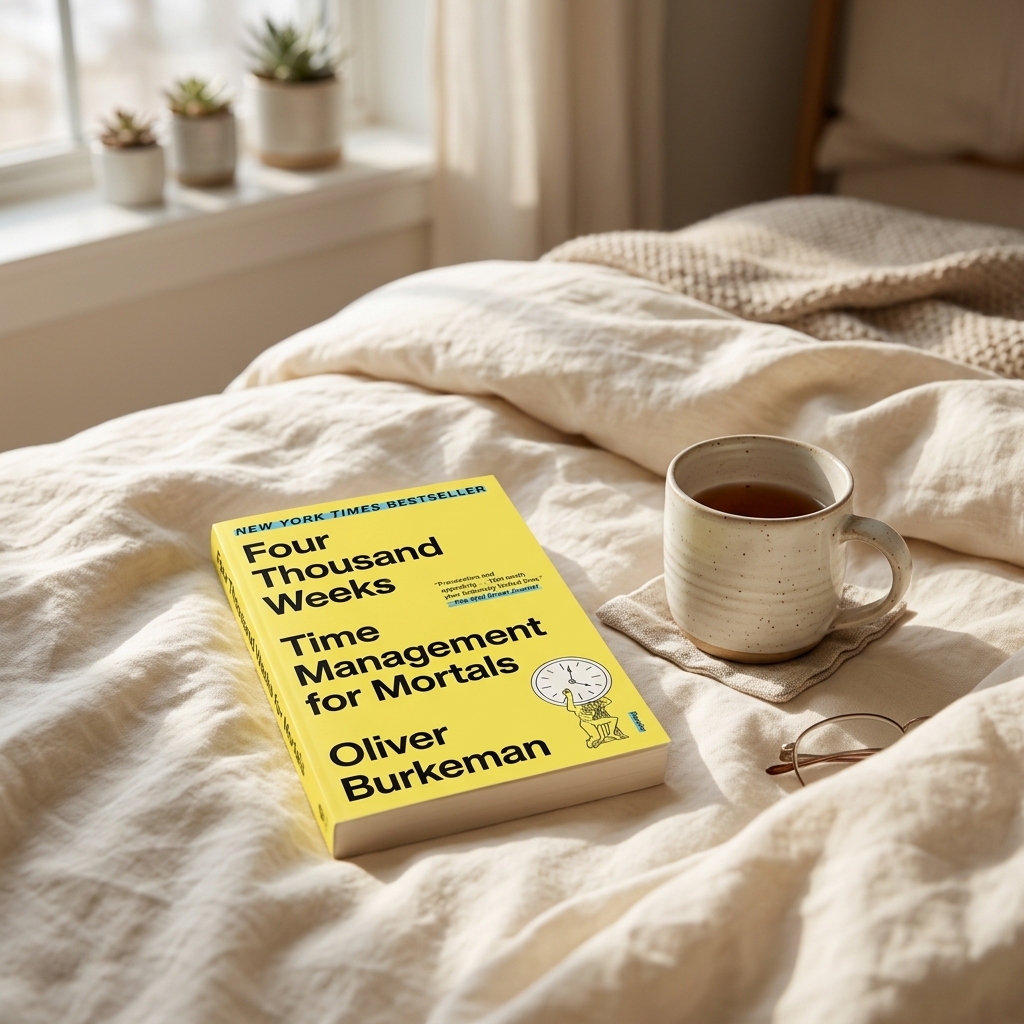
And it is exactly the myth that Oliver Burkeman dismantles in Four Thousand Weeks: Time Management for Mortals. The title comes from a sobering statistic: if you live to be eighty, you have about four thousand weeks on this earth. That is all. When you look at your life through that lens, the scramble to optimize your Tuesday afternoon starts to feel less like efficiency and more like a refusal to look at the truth.
Burkeman’s argument is not another list of tricks to squeeze more output from your day. In fact, it is the opposite. He suggests that the modern obsession with productivity is actually a way of avoiding the reality of our finitude. By pretending we can do everything, we avoid the painful necessity of choosing what to leave undone. Every time we say yes to a minor task, we are making a choice, even if we are too busy to notice it.
There is a quiet, surprising relief in reading this book. It doesn't tell you to work harder; it tells you that the fight is already lost. You will never get everything done. Your inbox will never be empty. The deck will never be fully cleared. And once you accept that, you can stop holding your breath. You can start living in the actual, messy, limited present instead of waiting for a perfect future that isn't coming.
I put my highlighters away after finishing the chapter on "the efficiency trap"—the frustrating truth that the better you get at processing emails, the more emails you attract. I didn't schedule my Thursday reflection. Instead, I just closed the notebook and sat there for a few minutes while the tea got cold. The list was still there, of course. But it had lost its power to make me feel small.
If you have been feeling tired of trying to fit a gallon of life into a pint pot of time, I highly recommend picking this up. It feels less like a self-help book and more like a quiet window opened in a very noisy room.
I read every note. The comment section here is the quietest corner of the internet — come sit.
Leave a note
Comments
Post a Comment