Wintering: A Quiet Guide for Hard Seasons
Why we need to embrace the cold seasons of our lives. A quiet Pages & Perspectives reflection on Katherine May's book Wintering.
 ✦ Save
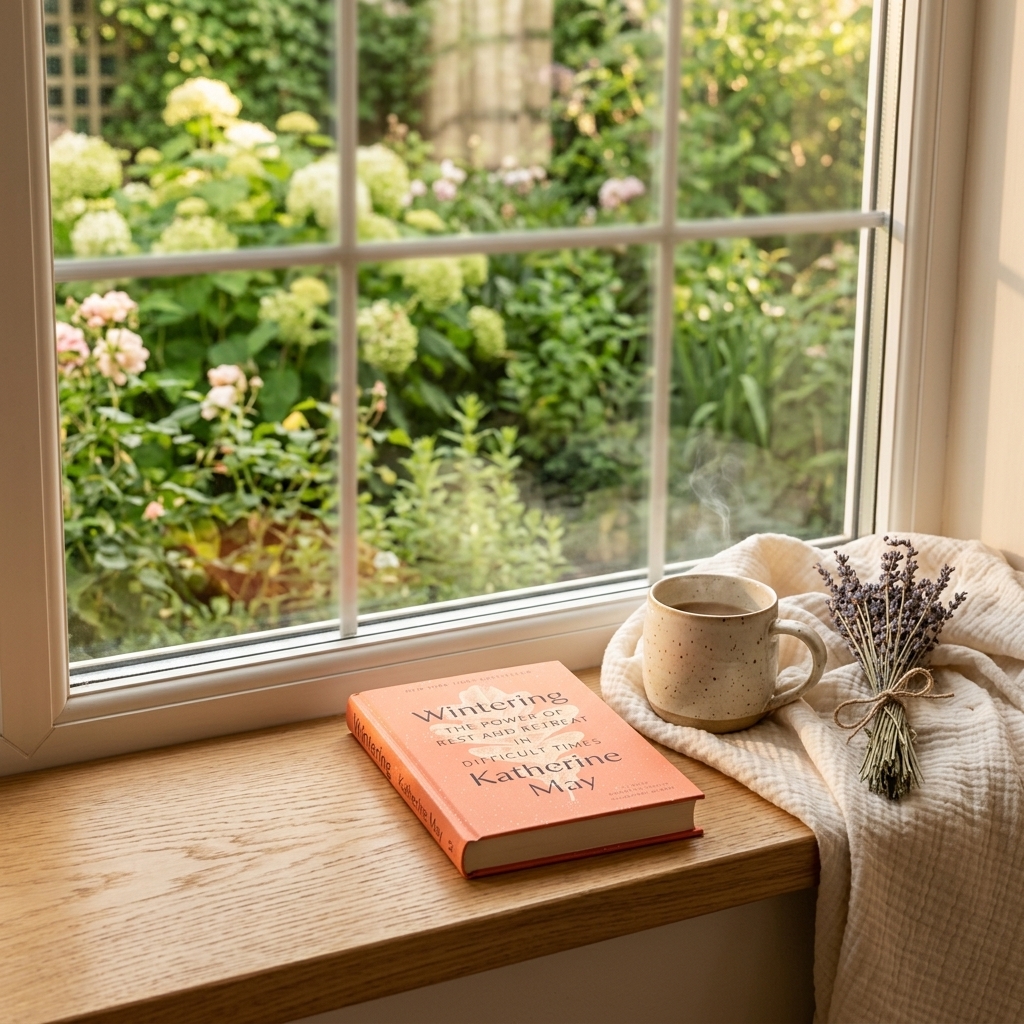
It was a cool Thursday evening, the kind where the dampness lingers in the air and you find yourself reaching for a sweater you thought you'd put away for the season. I pulled the beige cardigan tighter around my shoulders and looked at the nightstand, which currently resembles a small bookstore that has suffered a minor geological event. Resting right on top was a book I bought last winter but didn't open until now: Wintering: The Power of Rest and Retreat in Difficult Times by Katherine May.
This post contains affiliate links — see the disclosure for details. If you buy through them, it costs you nothing and keeps the lights on here.
Find a copy: Amazon
May defines wintering as "a season in the cold. It is a fallow period in life when you’re cut off from the world, feeling rejected, sidelined, blocked from progress, or cast into the role of an outsider."
For her, wintering is not a failure of willpower or a problem to be solved with more productivity. It is a natural, necessary cycle of life. Plants don't try to bloom all year round; they shed their leaves, go quiet, and retreat underground to survive the frost.
Yet we expect ourselves to remain in perpetual summer—always producing, always growing, always visible.
Reading May’s words felt like a permission slip I didn't know I was waiting for. It reminded me that the quiet periods, the times when we feel sluggish, uninspired, or simply tired, are not empty space. They are the soil in which the next season is preparing to grow. If we don't allow ourselves to go cold and quiet for a while, we run out of the energy required to bloom when the warmth returns.
We don't need to apologize for our winter seasons. We just need to let ourselves rest.
Warmly,
Evelyn
I read every note. The comment section here is the quietest corner of the internet — come sit.
Leave a note
Comments
Post a Comment