
Five Short Books for the End of Summer
As July slips into August, the stack of books beside my sofa hasn't moved in six weeks. Heavy hardcovers, stacked in the order I arranged them in early June…
As July slips into August, the stack of books beside my sofa hasn't moved in six weeks. Heavy hardcovers, stacked in the order I arranged them in early June, back when summer stretched ahead like a wide, empty highway. Back when I believed I’d be the sort of person who spent her weekends reading doorstop novels on a sunlounger, rather than the one wrestling a rogue tomato plant and falling asleep on the sofa by nine. What I’ve been reaching for instead are short books for the end of summer.
This post contains affiliate links — see the disclosure for details. If you buy through them, it costs you nothing and keeps the lights on here.
The one on top is five hundred pages long. I was so sure about it in a bookshop in May, and I still am. I just don’t have a whole unbroken afternoon to give it anymore, and late summer has stopped handing those out.
What I want instead are books that fit into whatever thirty minutes is left of a day and still say something that stays with you after the lamp goes off. Call it the September edit: not more reading, a smaller and more honest list. Here are five, before autumn asks something different of me.
01Matcha on Monday — Michiko Aoyama, translated by E. Madison Shimoda
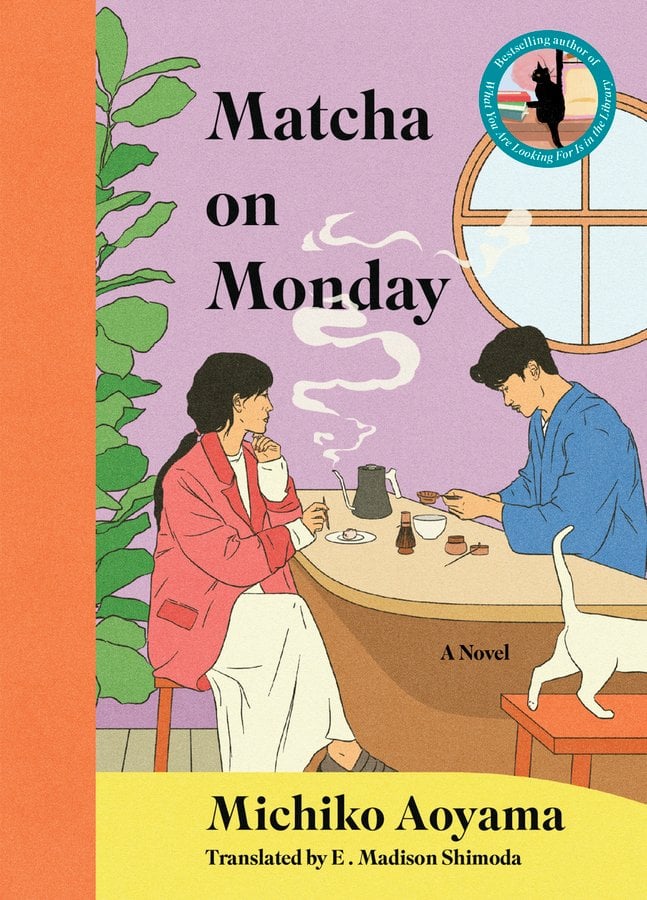
This landed at the start of July, which in this house counts as breaking news. It’s the second of the Marble Café books, after Hot Chocolate on Thursday, and if you know Aoyama from What You Are Looking For Is in the Library you already know the register. Ordinary people, a small room, nothing dramatic — and then everything slightly rearranged.
Café Marble sits behind a row of cherry trees in Tokyo, and on Mondays the owner runs a tea tasting. Twelve months, twelve customers: a woman whose attitude is the real problem and half knows it, a couple in the middle of something they can’t name, an artist who has lost the thread of why she started, a young woman trying to get out from under what her family expects. A white cat watches and offers no opinion.
Two hundred and eight pages, and each month more or less stands on its own. Which means it asks for twenty minutes, not an afternoon. That is the entire reason it is first on this list.
02Swell — Son Bo-mi, translated by Janet Hong
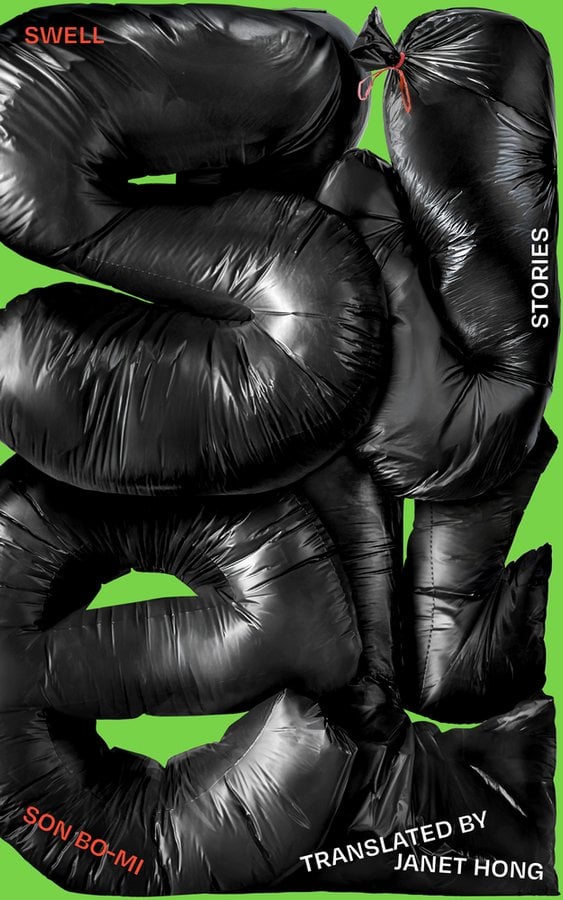
This is the one on the list that will not soothe you, and I am putting it here anyway.
Nine stories, two hundred and forty pages. The first is about a writer who takes a friend’s worst thing — the death of his son in a shooting at a concert — turns it into fiction, and then goes on living in the same city as the man she took it from. The last story tells it again differently: the son survives, and the father doesn’t come out whole. In between, characters wander out of one story into another carrying histories that don’t match. There are essays about films that were never made. There is a UFO in a kitchen.
It sounds like a great deal. It reads like nine short, clear, unhurried pieces, and Janet Hong’s translation is unexpectedly funny in places. You can take one story at bedtime and be done in fifteen minutes. Whether you sleep afterwards is a separate question.
03Simple Heart — Cho Hae-jin, translated by Jamie Chang
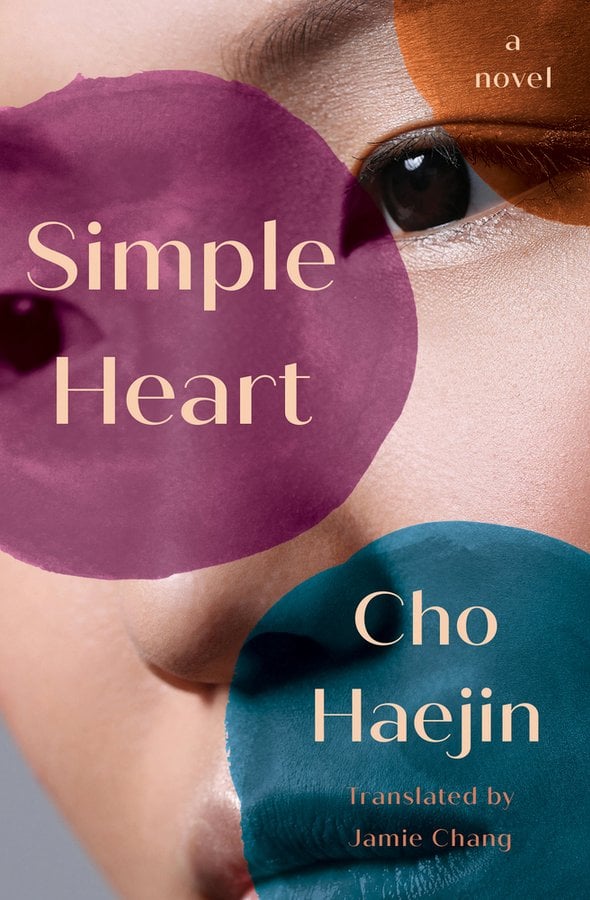
Nana was left at a train station in South Korea as a baby. A conductor kept her for a while, then an orphanage, then a French couple adopted her, and she grew up in France and became an actor and a playwright. Three names for three lives: Jung Munju, Esther Pak, Nana.
The book finds her pregnant and working out whether to do this alone, at which point a filmmaker called Seoyeong asks to make a documentary about international adoption. So they go back — to the station, to the places. What Nana finds is not her mother. It’s Yeonhee, a former midwife who runs the restaurant under Seoyeong’s flat, and a handful of people who were never meant to be family and become it anyway.
Two hundred and forty pages, and Cho’s writing turns lyrical, almost strange, whenever it gets near the subject of mothers. It’s the one here I’d hand to anyone who has been quietly rearranging what the word family is supposed to mean.
Before the last two — I made a small printable reading journal for exactly this kind of scattered, in-between season. The kind where you’re juggling four books, finishing none, and feeling faintly guilty about it. It’s $3.99 and mostly blank space, for tracking what you’re actually reading rather than what you meant to. It’s here, if that’s useful.
04The Salt Path — Raynor Winn
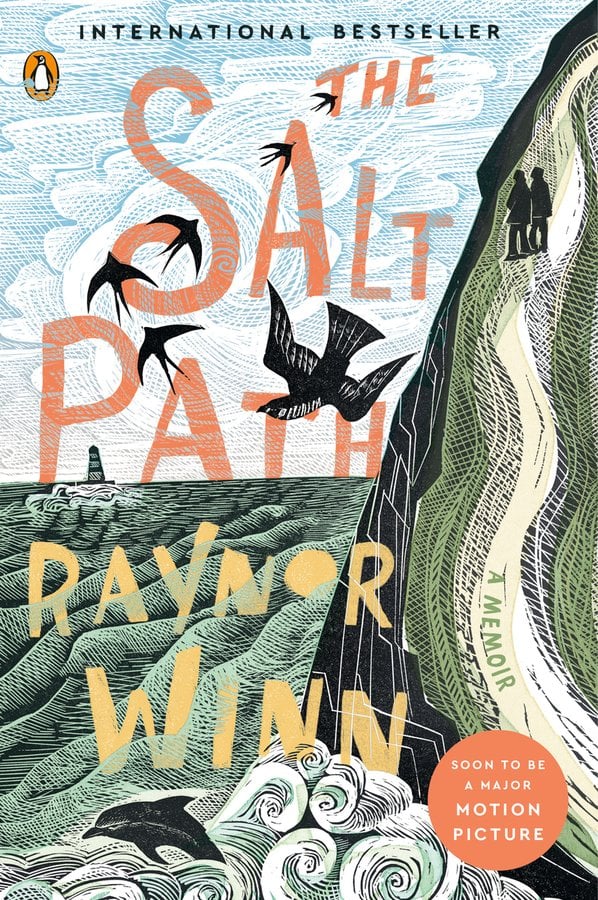
A memoir about losing a house, a livelihood and receiving a terminal diagnosis inside the same fortnight, and then walking six hundred and thirty miles of English coastline with what fits on your back, wild camping because there is no other option. I know that sounds like the opposite of gentle August reading.
It isn’t. It’s about weather, tide tables, the way light moves over water, and what a body turns out to be capable of once you stop asking it to carry your whole identity as well. It made the end of the season feel less like an ending and more like a coastline — a thing you walk along, not a cliff you fall off.
One thing I’d rather say than quietly leave out. Since last year the book has been the subject of an Observer investigation questioning parts of Winn’s account, and she has since admitted giving some false details. I don’t think that undoes what the walking chapters do to a reader. But if you go in expecting documentary truth, you should know the argument is live.
05Phosphorescence — Julia Baird
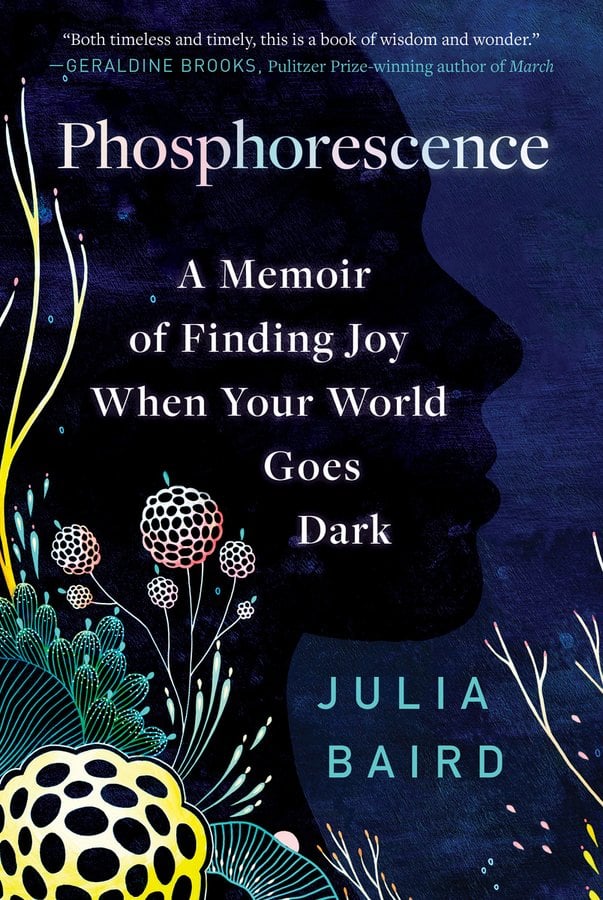
The book starts from the fact that some sea creatures make their own light in the full dark of the deep ocean. Baird’s argument, across these searching essays, is that people need a version of that too — some source of glow that doesn’t depend on the sun being out, or the year going well, or life looking the way you planned it.
I saved it for this exact week, when the evenings are visibly shorter than they were in June. Being essays, it’s the easiest thing here to put down and pick back up in ten-minute pieces, and somehow the hardest to stop thinking about.
06The Edit: Short Books for the End of Summer
The five-hundred-page novel is still on the floor beside my sofa. I haven’t given up on it or hidden it in a drawer. I’ve just stopped pretending it belongs to these particular weeks, the ones with less light in them and a faint hum of September underneath.
That’s the whole idea of the edit. Not becoming a smaller reader, or admitting defeat — just being honest about what a particular season can hold. A short book at the end of summer isn’t a lesser kind of reading. Often it’s the only kind that’s true to where you actually are.
I made this argument once before for a different kind of tired — short books for the weeks you’re too tired to read anything else — and this is its late-summer cousin. It sits alongside the books I’m letting this summer be slow with. If translated fiction is becoming a habit, June’s quiet list has more in the same register, and there’s a longer shelf in the under-the-radar stack.
If you know someone staring down a stack of unread books and feeling guilty about it, send this to them. Give them permission to put the heavy things down a few more weeks.
I send a short letter most weeks — one thing I’m reading, one thing I’m noticing, and a free reading page when you join. Sign up here, or find the same letters at quietlyevelyn.substack.com.
I read every note. The comment section here is the quietest corner of the internet — come sit.
Leave a note
Comments
Post a Comment