What I Changed About the Hour Before Sleep
My evenings were as packed as my mornings. One small, unglamorous change to the hour before sleep, and what it quietly did.
 ✦ Save
I wasn't tired, exactly. I wasn't awake in any useful sense either. I was in that particular suspended state, the one where the body wants to stop but the brain hasn't received the memo, scrolling to the next episode before the credits even finished, which is its own kind of answer to a question nobody asked.
This post contains affiliate links — see the disclosure for details. If you buy through them, it costs you nothing and keeps the lights on here.
I've spent a lot of time thinking about mornings. What to do with the first ten minutes, how to start before the day gets hold of me. But my evenings, it turns out, were just as crowded. I was handing the last hour of the day to the same things I'd been handing it all day: screens, noise, the low-level hum of consuming something. I was ending one busy thing and calling it rest.
If this is landing somewhere familiar, join Quietly, Evelyn by email. I write short notes on gentler habits, quieter evenings, and the small shifts that make life feel a bit more like your own.
Start with the free guide, The Reading Page, or begin at Start Here.
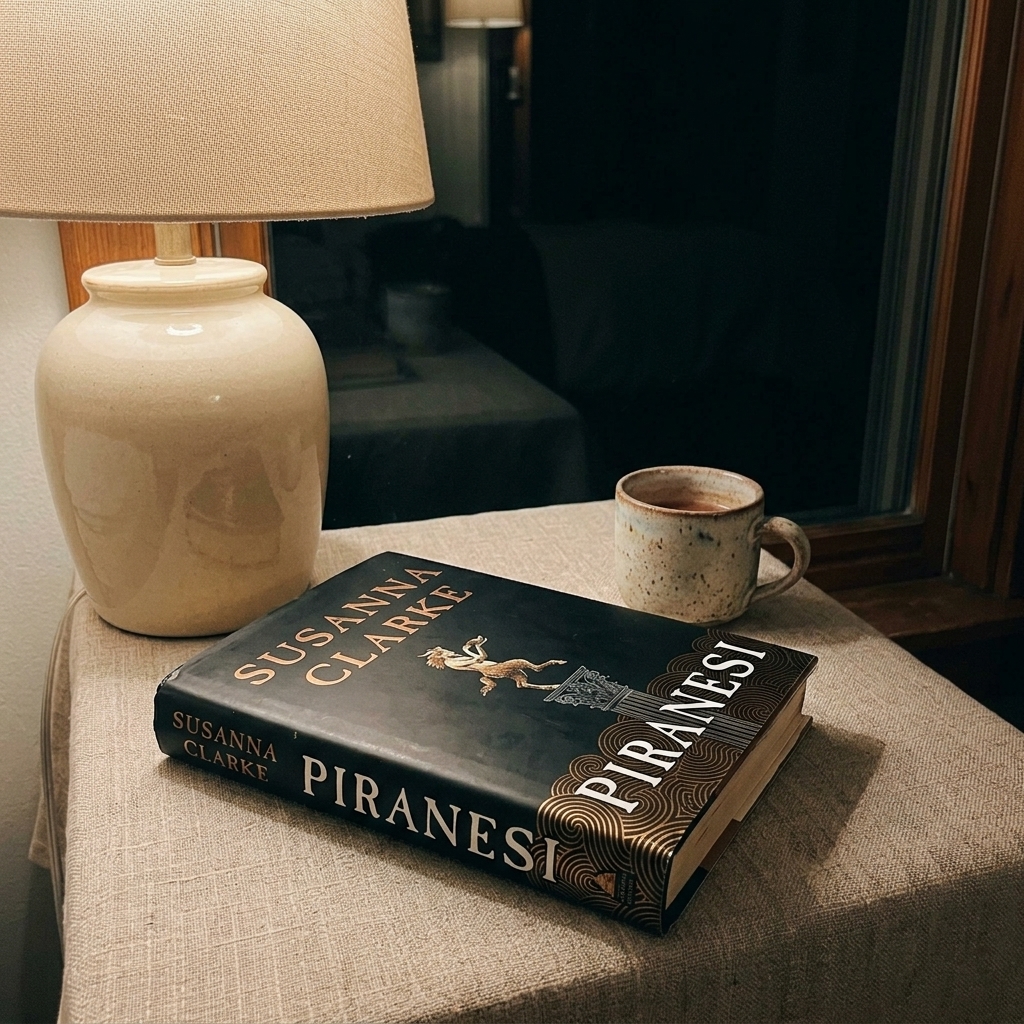
The change I made was almost embarrassingly low-tech. I put a novel on my nightstand. Right now it's Piranesi by Susanna Clarke. It is about a man who lives in a house containing the whole ocean, keeps meticulous notes about the tides and the birds, and finds his small world endlessly rich. Strange and quiet and completely absorbing. Not something improving, but a world that isn't mine. And I started reading it instead of watching whatever the algorithm suggested next.
Some nights it was twenty minutes. Some nights it was three pages before my eyes gave up. But something shifted in a way I didn't quite expect. Fiction, it turns out, gives your brain somewhere to go that isn't your own life. It's a different kind of rest than silence, and some evenings it's the only kind I can actually access.
I'm still not great at evenings. But I'm better at noticing when I'm not winding down, only rearranging the busyness into a smaller screen.
If you're looking for more of this quieter corner, Life in Sync is where the routines and gentle habits gather.
I read every note. The comment section here is the quietest corner of the internet — come sit.
Leave a note
Comments
Post a Comment